
What Is a Spec House, and Is Buying One in Idaho a Smart Move?
Reviewed by Garrett Pancheri and Dustin Cagle
Team Leaders, Living In Idaho | LPT Realty | View Profile
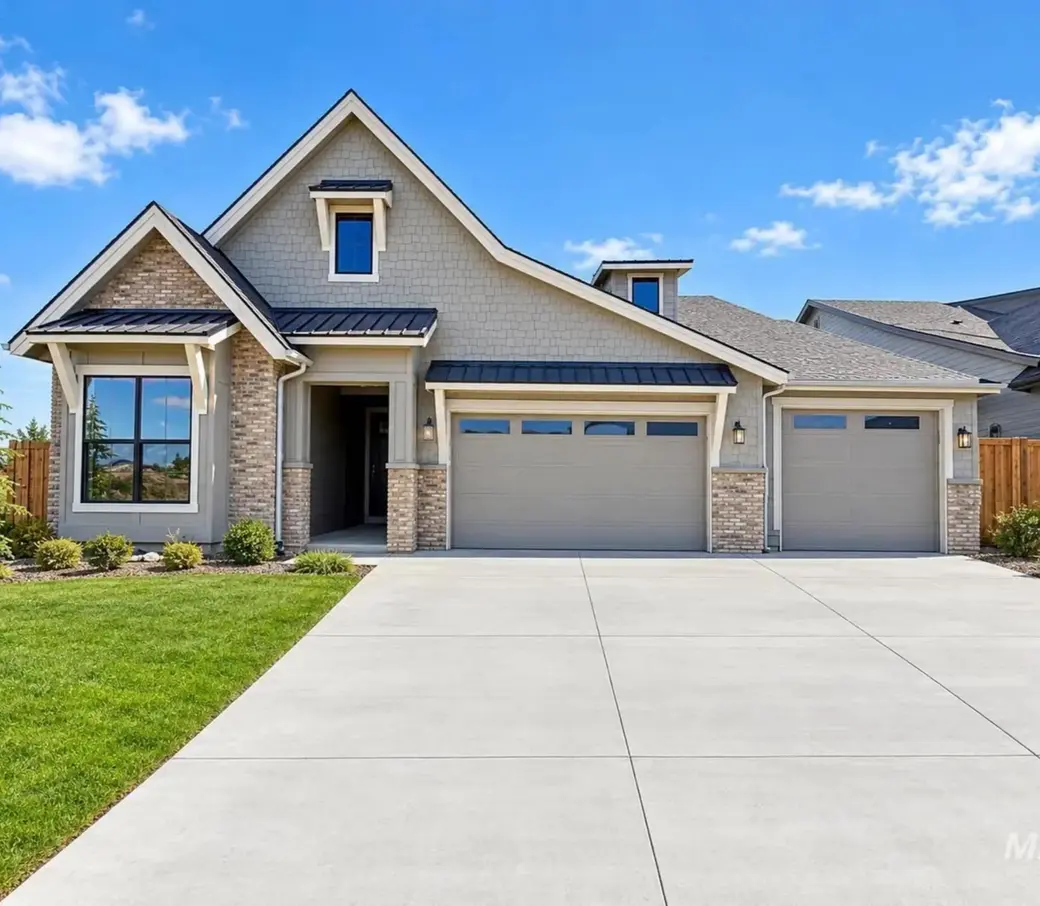
A spec house (short for "speculative house") is a new home a builder starts before any buyer has signed a contract. The builder picks the lot, floor plan and finishes, pays for construction up front, and sells the home when it is finished or close to it. You give up most design choices, and in return you can usually move in within weeks instead of waiting months for a build.
What is a spec house? It is a new home the builder bets on before anyone has agreed to buy it. Drive through almost any new Treasure Valley subdivision and you will see them: finished homes with a "Quick Move-In" sign in the yard and nobody living there yet. We put this guide together for buyers relocating to Idaho who are weighing new construction against a resale home.
Compare new and resale homes Homes for sale in Idaho | Idaho communities | Affordability Calculator
What Is a Spec House?
A spec house is a brand-new home built "on speculation," meaning the builder starts it without a buyer and expects to sell it on the open market. You will also hear inventory home, quick move-in home or move-in-ready home. The trade is simple: less say in the design, a much shorter wait.
Key Takeaways
- Built before a buyer: the builder carries the cost and risk until it sells.
- Fast move-in: a finished spec home closes on a normal resale timeline.
- Limited choices: the floor plan is set, and finishes usually are too.
- Negotiate perks: closing cost credits and rate buydowns are where builders move.
- Idaho disclosures: state law requires lien and insurance disclosures before you sign and before you close.
Table of Contents
- Quick Answer
- Key Takeaways
- What Is a Spec House, Exactly?
- Spec Home vs. Custom Home (and Everything in Between)
- Are Spec Homes Cheaper?
- Can You Negotiate on a Spec House?
- How Does Spec Home Financing Work for Buyers?
- What Does Idaho Law Require From the Builder?
- Pros and Cons of Buying a Spec House
- What Should You Check Before You Sign?
- Spec vs. Tract vs. Custom, Side by Side
- New Home Market Key Facts
- Frequently Asked Questions
- Conclusion
What Is a Spec House, Exactly?
"Spec" is short for speculative. The builder is betting the market will produce a buyer at a price that covers the land, the construction and a profit.
That bet shapes the design. A custom home is built around one buyer's wish list. A spec home is built around what the most buyers in that price range will want. Neutral paint, popular finishes, an open main floor. Nothing that scares anybody off.
Spec homes come in tiers, from builder-grade homes in a large subdivision to luxury builds on a single lot. Same idea, different price point.
Spec Home vs. Custom Home (and Everything in Between)
New homes sit on a line from "decide nothing" to "decide everything":
- Spec home: already built or under way. Floor plan, lot and most finishes are locked. Catch one early in construction and some builders still let you pick a few finishes.
- Tract or production home: you pick a lot and one of the builder's catalog floor plans, then choose from upgrade packages. Construction starts after you sign, so you wait for it.
- Custom home: you and an architect or custom builder design nearly everything, usually on land you choose. The most control, the longest timeline, and usually the highest cost per square foot.
- Model home: the decorated home a builder uses to show off the community. It is often sold last and usually carries the most upgrades.
Are Spec Homes Cheaper?
Cheaper than what? That is the real question.
Compared with a custom build, usually yes, per square foot. Builders reuse proven plans, buy materials in volume and avoid the mid-build change orders that blow up custom budgets. The price is also fixed and already includes the lot, the house and the finishes.
Compared with a resale home down the street, not necessarily. Nationally, the median new home sold for $400,400 in September 2026, according to the Census Bureau's new residential sales report. Treasure Valley prices run on their own numbers, so compare against recent local sales. Then add what the spec home may not include yet, like blinds, a fence or backyard landscaping.
Can You Negotiate on a Spec House?
Yes, just not always on price. Every sale in a subdivision becomes a comparable sale for the next appraisal, so builders protect the base price. Meanwhile, a finished home that does not sell still costs them taxes, insurance and loan interest every month. That is your leverage. Where builders tend to move:
- Closing cost credits instead of a lower price.
- Interest rate buydowns, which can matter more to your payment than a small price cut.
- Upgrades like blinds, appliances or a fence, especially before the home is finished.
- Price on finished inventory that has sat for a while.
Census counted about 111,000 completed new homes for sale nationally at the end of September 2026. When finished inventory is high, buyers have more room to ask.
How Does Spec Home Financing Work for Buyers?
A quick clarification. "Spec home financing" usually means the construction loan the builder used. That is the builder's problem, not yours.
As the buyer, you typically use a standard purchase mortgage, not a construction loan, because the house is built or nearly built. Conventional, FHA, VA and USDA loans can all work, subject to the usual lender and property requirements.
The catch is the incentive. Many builders offer credits if you use their affiliated lender or title company. That can be a good deal or a so-so deal wearing a nice bow. The Consumer Financial Protection Bureau encourages buyers to request and compare Loan Estimates from multiple lenders, and says shopping around can potentially save $600 to $1,200 a year. Extra Loan Estimates do not hurt your credit. Get one outside estimate for the same loan, and you will know what the incentive is actually worth.
What Does Idaho Law Require From the Builder?
Most national articles skip this. Idaho Code section 45-525 covers the purchase of newly constructed residential property over $2,000. Before you sign, the builder must give you a written disclosure, and you sign an acknowledgment. It must tell you that you have the right to:
- Require lien waivers from the builder's subcontractors, at your reasonable expense.
- See proof of insurance: general liability including completed operations, and workers' compensation.
- Buy extended title insurance covering certain unfiled or unrecorded liens.
- Require a surety bond, at your expense, up to the value of the project.
A reasonable time before closing, the builder must also give you a signed list of the subcontractors, suppliers and rental equipment companies it hired directly that did more than $500 of work or materials on the home. If a sub did not get paid, that list tells you who to ask. Skipping these disclosures counts as a deceptive practice under the Idaho Consumer Protection Act. Read the forms. Do not just initial them.
Pros and Cons of Buying a Spec House
- Pro, speed: no waiting on a full build when you are relocating or your lease is ending.
- Pro, you can see it: walk the rooms and check the workmanship before you commit.
- Pro, known price: no change orders and no mid-build surprises.
- Con, someone else's taste: finishes were chosen for the average buyer.
- Con, fixed plan and lot: you cannot move a wall or pick a different lot.
- Con, HOA rules: most new subdivisions have covenants that limit fences, exterior changes and parking.
What Should You Check Before You Sign?
- Bring your agent on the first visit: some builders will not work with a buyer's agent who did not register with you on day one. The sales rep represents the builder.
- Look up the builder: confirm its Idaho contractor registration and talk to owners in its older subdivisions.
- Get an independent inspection: city inspections check code compliance, not workmanship. Your inspector works for you.
- Walk the outside: the yard should slope away from the foundation, and downspouts should drain away from the house.
- Read the warranty, not the brochure: many builders cover workmanship for one year, major systems for two and structure for ten. Get the actual terms in writing.
- Ask what is staged: furniture, rugs and some fixtures in a decorated spec home may not come with it.
- Know your rights: builders, lenders and agents all have to follow federal fair housing law, so the same homes, terms and incentives should be offered to every buyer.
Still choosing an area? Our guide to the best places to live in Idaho compares towns by price, commute and what is nearby.
| Type | Who Picks the Design | Wait to Move In | Typical Buyer Financing |
|---|---|---|---|
| Spec home | Builder | Shortest, often a normal closing timeline | Standard purchase mortgage |
| Tract or production | You, from the builder's catalog and packages | Full construction period after you sign | Standard purchase mortgage at completion |
| Custom home | You and your architect | Longest, design plus construction | Construction loan, often converted to a mortgage |
| Measure | Figure |
|---|---|
| New homes for sale | 476,000 |
| Already completed | About 111,000 |
| Months of supply | 8.4 |
| Median new home sale price | $400,400 |
| Source | U.S. Census Bureau and HUD, released October 27, 2026 |
Related reading: how to move to Idaho · what it is like living in Idaho
Explore New and Resale Homes in Idaho
Prefer to talk first? Call or Text (208) 586-3066
Frequently Asked Questions
Is it a good idea to buy a spec home?
It can be, if your timeline is short and the builder's floor plan and finishes already work for you. Get an independent inspection, read the warranty, compare financing with an outside lender, and make sure you receive the Idaho Code 45-525 disclosures.
What is the difference between a custom home and a spec home?
A custom home is designed around one buyer and built after that buyer signs. A spec home is designed by the builder for a broad market and built before a buyer exists. Custom gives you control. Spec gives you speed and a fixed price.
Why are spec homes cheaper?
Compared with custom homes, builders save with proven floor plans, bulk materials and no mid-build change orders. They are not always cheaper than a comparable resale home, so compare total cost.
Can you negotiate on a spec house?
Yes. Builders often hold the base price to protect comparable sales but frequently offer closing cost credits, rate buydowns and upgrades. Finished homes that have sat a while leave the most room.
Do you need an inspection on a brand-new spec home?
Yes. City inspections confirm code compliance, not workmanship. An independent inspector works for you, and the builder can fix items before closing.
What is a spec house in The Sopranos?
Same idea as real life: a home built without a buyer lined up, as a bet it will sell. Buying one in Idaho involves more paperwork and far fewer threats.
Conclusion
A spec home trades design control for speed and a known price. That works for a lot of buyers, as long as you bring your own agent, get an inspection, compare financing and read the Idaho disclosures. Incentives, warranties and market conditions change, so confirm details with the builder and your lender before you sign. Garrett Pancheri and Dustin Cagle at Living In Idaho are happy to walk any home with you. Worst case, you get a straight answer to the question we started with: what is a spec house, and is this one worth buying?
Categories
Recent Posts









Leave a Reply
